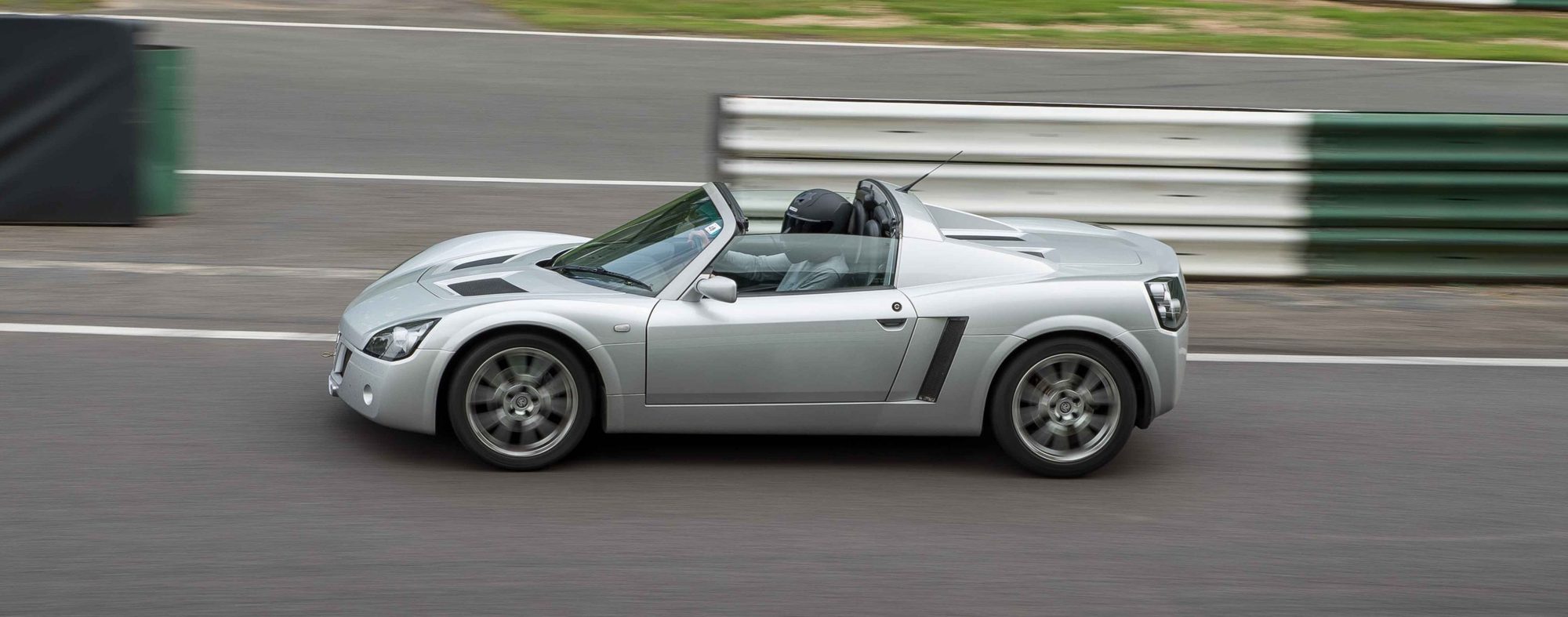
Pedal goes hard and the car won't slow down ("ice mode"), mostly on track
A Turbo owner on an airfield and at Rockingham found that heavy braking over a short distance, from about 80 mph to a roundabout speed, changed the pedal feel just when he needed the brakes most. The pedal felt pressurised, as if it could go further without more braking. Many other owners described the same thing on track and occasionally on the road: the pedal goes rock hard like losing servo assist, then goes soft and drops away, with no chatter from the ABS.
- Owners blame the ABS. Several said that the problem disappears when the ABS is disconnected. One said the two-channel ABS cannot cope with trail braking, where the load on each wheel differs. They said it gets worse with sticky tyres and the 16/17 inch wheel combination (more grip), and on bumpy surfaces, and one added stiff Nitron dampers. Another said braking downhill into a corner brought it on every time.
- "Ice mode" as one owner described it: brake hard enough and the ABS works in a normal mode. Push a bit harder and the car thinks you are on ice, and braking falls by about half. He said the way out, which he was shown on a driver training day, is to ease the pressure slightly while staying in the ABS zone, and full braking comes back. Another owner who tried it said you do not need to lift right off. That is one owner's description, not a specification, and it is hard to do when it takes you by surprise.
- Remedies owners gave: live with it and expect it; disable the ABS; or fit the ABS unit from the Exige or VXR, which is a four-channel unit. One owner said the last works for some people and not others. Nobody posted a result in this thread.
- Disabling the ABS can be done with a switch (see ABS cut-off switch), a spade connector in the wire that you pull apart for track days, or by unplugging a wheel sensor. Pulling the ABS fuse also loses the speedometer and rev counter. The ABS light comes on in each case.
- Insurance. One owner phoned an insurer, who said a switch is a modification and wanted an admin charge of about £27. He made a permanent join in the wire, left the ABS on, and said he was happy with it once he understood how it behaves, especially in the wet. Another thought an ABS switch could give an insurer an excuse not to pay. That is opinion.
- Single wheel locking over bumps. One owner with a standard 2001 NA said that sometimes the ABS caught one front wheel over a bumpy surface while the other three freewheeled, so he lost steering until he lifted off. It was intermittent and could not be repeated at two garages. Another owner with Nitrons and the standard ABS had the same and said the only cure was turning the ABS off. The first owner cracked his front clam running onto a grass verge.
Firm pedal, almost no braking, after a long full-throttle run
See the 2010 case in the ABS cut-off switch guide: owners blamed glazed pads and the servo, and reproduced it back-to-back with the ABS off. Others offered pads that lock up hot on track, which cures itself on cooling.
Weak brakes on the first stop after the car has stood
- One owner found that after the car had stood overnight the brakes were ineffective, with none of the usual scraping noise, and returned to normal after 5 to 10 minutes.
- Owners said it is cold, damp pads and a film of rust on the discs, and that several brake applications clear it. It is worse with Mintex 1144 pads, which take longer to warm up and feel dead on the first few stops, though better than standard pads once warm. Another owner said it had been dry for months in his case, so rusty discs being cleaned up by the pads would do the same.
- Other checks suggested: the fluid level, whether the pedal firms up if you pump it with the engine off, new pads and fluid (changed every two years ideally), and the inner face of the discs, which wears faster than the outer.
- That is a reasonable explanation if it only happens first thing and clears quickly. It does not fit a pedal that stays hard or dead when warm.
- See front pads, brake fluid and servo hose.
Testing the servo
This came from a thread about another make of car, but the method is general. Owners agreed it is a quick test.
- Run the engine for a few seconds, then switch it off.
- With the engine off, pump the brake pedal 6 or 7 times.
- Hold the pedal fully pressed and start the engine.
- The pedal should sink further once the engine runs. If it does not, suspect the servo, or its vacuum supply.
- To check the vacuum, take the pipe off the servo, start the engine, and you should feel enough suction to hold your finger on the end of the pipe. The one-way valve on the servo also needs checking.
- In that case a hard pedal after a master cylinder change turned out to be the servo pushrod: it can pivot at the end and would not line up with the master cylinder piston. Someone had to press the pedal fully, bringing the pushrod forward, while the master cylinder was fitted. It was a different make of car, so treat it as a general hint.
Pedal slow to come back up
One owner found the pedal slow to return and not following the foot back up, though fine when stationary, and wondered about the master cylinder. A reply suggested the pedal has a return spring like the clutch. That was a guess and the thread ends there.