
Cut one wire in the ABS module's plug and put a switch in the gap. With the switch on, the ABS works as normal. With it off, the ABS is disabled and the dash light comes on. The original write-up was done on a right-hand-drive VX220. A Speedster or left-hand-drive car will be different, and it isn't stated whether the wiring is the same on the Turbo and the NA.
Which wire to cut
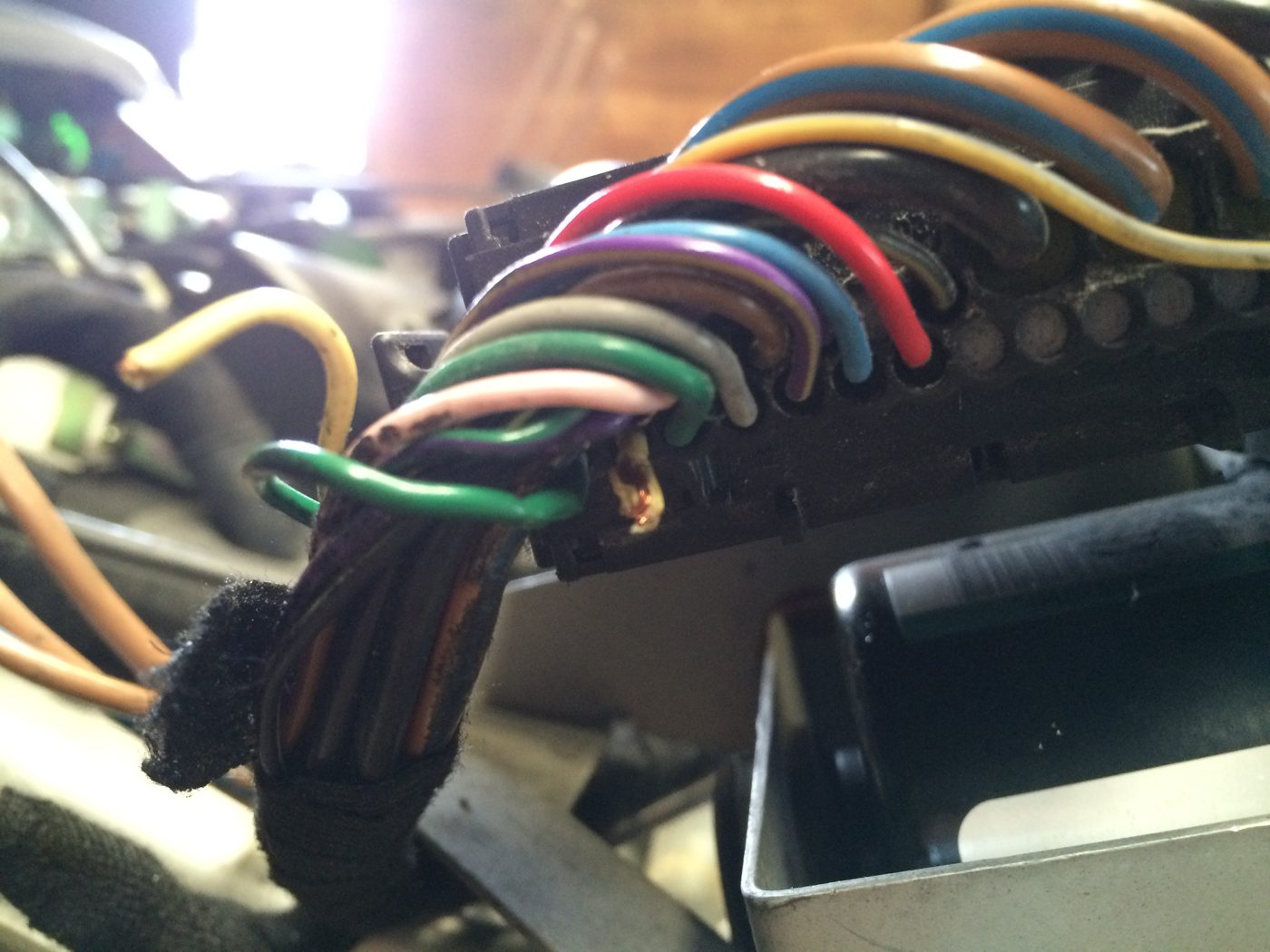
This is the part that goes wrong. Near the ABS plug there are two yellow wires, and they do different jobs.
- The original author remembers the two ABS feeds as yellow/white and pink/white, wrapped around each other, and cut the yellow one. His photo wasn't clear enough to confirm it.
- Cut the wrong wire and the ABS switches off, but so does the speedometer. One owner cut a yellow wire, found the ABS light stayed off whether the connectors were joined or not, and the speedo had gone. He then cut the other yellow wire, the one wrapped around the pink wire, and the light came on when the connectors were apart. He later described the second yellow wire as the rev counter's, not the speedo's, so which one is the other is not settled.
- Of the two yellow wires, one has a faint grey stripe and one is solid yellow. The solid yellow one was the ABS wire on one car, and another owner agreed with "full yellow".
The reports point to the plain yellow wire going to the ABS, but the colours are from memory. Test before you tape anything up.
The steps
- Find the ABS module and unplug it. On a right-hand-drive car it is above the front right wheel arch. The plug looks like an oversized scart plug. Pull the side part out to release it, and push it in again to refit. It needs care.
- Open up the loom. Unwrap the tape to find the two yellow wires, and work out which is the ABS one.
- Cut that wire and join the switch in. Strip the ends and fit connectors. Bullet connectors are quick. You can also use a pair of bullet connectors as the switch itself, unplugging them to run without ABS and joining them to get it back. One owner did this on the wire to the front left wheel and covered it with cable tidy.
- Plug it back in and test.
- Switch on, ignition on: the ABS should be fine, with no lights on the dash. Turn the ignition off.
- Switch off, ignition on: the ABS should be disabled, and the ABS light comes on. Turn the ignition off.
- Tidy up. Wrap the loom again with plenty of tape and cable ties. One owner also taped the metal part of each bullet connector in case it touched other metal. Another thought that unnecessary, since the connectors have plastic covers and the current is low, but it can't hurt.
Where to put the switch
- Under the bonnet, in the towing eye hole. Move the towing eye and its rubber grommet to the other side, where there should already be a hole, and fit the switch in the hole it leaves. The wires stay short, but access to the back of the switch is tight with the brake servo in the way. A second owner did the same and said the switch fitted perfectly.
- Inside the cabin. Possible, with longer wires. This isn't covered here.
- No switch at all. Leave the bullet connectors accessible and unplug them when you want the ABS off.
Key switches. One owner broke the key on a key-operated switch while testing it, and says the keys can be very weak. Another looked at a car that had a key switch, and the ABS light stayed on whichever position the key was in.
Other ways to switch it off
- Pulling the ABS fuse also loses the speedometer, according to one owner, so it isn't a clean alternative. Fuse 22 is the 10 A ABS fuse (see Relays and fuses). Another owner has run the car without that fuse a few times.
- The rear brake proportioning. One owner passed on a comment from another thread that to disable dynamic rear proportioning (DRP) as well, you would also disconnect the right rear ABS sensor. That is second-hand and unconfirmed.
What owners reported
These are opinions, not tests. They agree with each other, but there are no figures.
- Track use. Most people on track days have the ABS off, and braking was much better for one owner without it. His advice for a first try: find a quiet, open area with nobody behind you, brake hard progressively with the ABS on, then do the same with it off.
- Hard pedal. One owner had a hard brake pedal on track that killed his confidence. At the next track day he turned his switch off, which he had fitted five years earlier, and said the brakes were consistent.
- Road use, wet. One owner says the ABS on these cars is "hit and miss": sometimes it cuts in just enough, and sometimes far too early on a slippery patch, so you lose most of your braking. After testing in the wet he said it was loads better, though he still had to come almost all the way off the brakes to free a locked wheel, and thinks he needs pads that release better. Others left it off after trying it.
- Pads first? One owner suggested changing to Mintex pads first and seeing if that helps. See the front and rear pad guides.
- The light. You have to live with the ABS light being on in the off position.
- Insurance. One owner declared the switch and said it made no real difference to the premium. Another said his insurer treated it as a "brake upgrade" with no change in premium. That is two experiences, not a rule.
- MOT. One owner assumed a warning light that stays on would fail an MOT, so he leaves the connectors apart and plans to join them for the test. Check with your tester.