
What the swap is
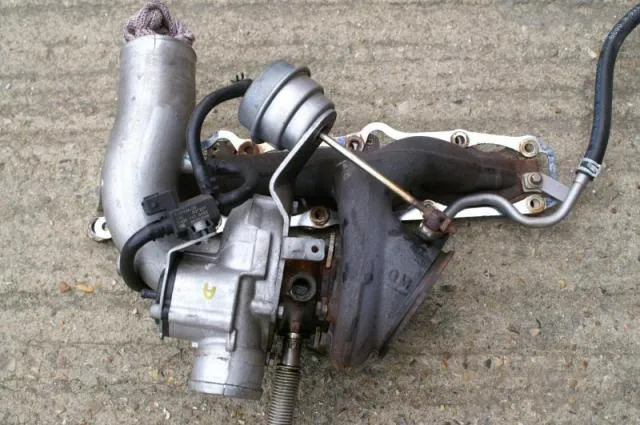
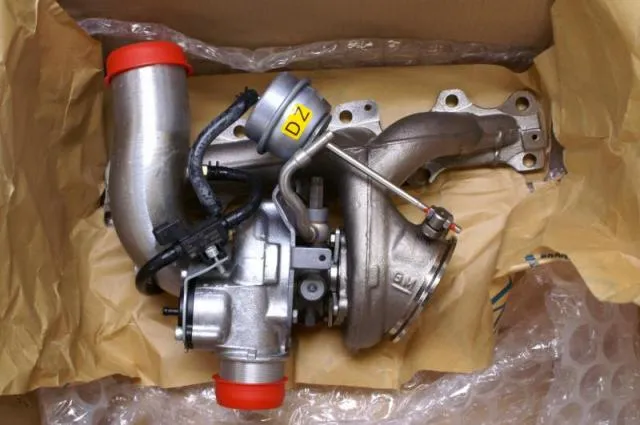
One owner (2006) swapped the standard Z20LET turbo on a Turbo for the Z20LEH unit from the Astra VXR, ahead of fitting bigger injectors and remapping. He called the VXR unit a hybrid with a stronger cast manifold, which he said makes it more durable and less prone to cracking from heat, "which can be an issue on VXT". He said they often fitted it to standard cars where the original turbo had failed, because the standard turbo cost more.
How he did it
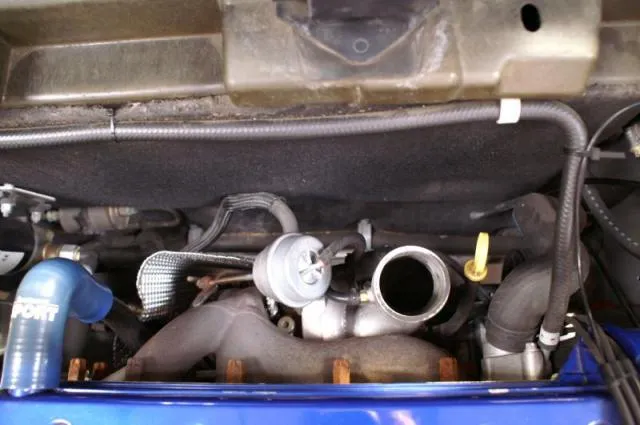
All from above, without a ramp. By his account the job went from the upper heat shield and inlet air pipe off at about 10 am to the old turbo out by about 12. He said the rear clamshell and exhaust heat shield had to be removed, and that even the turbo downpipe, which usually needs a ramp, was accessible from the top. One owner quoted about 4 hours to fit.
- Remove the upper heat shield and the inlet air pipe, plus whatever is in the way (his photo of the removed parts shows a heat shield, a blue silicone hose and pipes).
- Remove the turbo unit. He noted that the oil and water feeds stay on the engine.
- Swap the oil and water drain pipes over from the standard turbo to the VXR one before fitting.
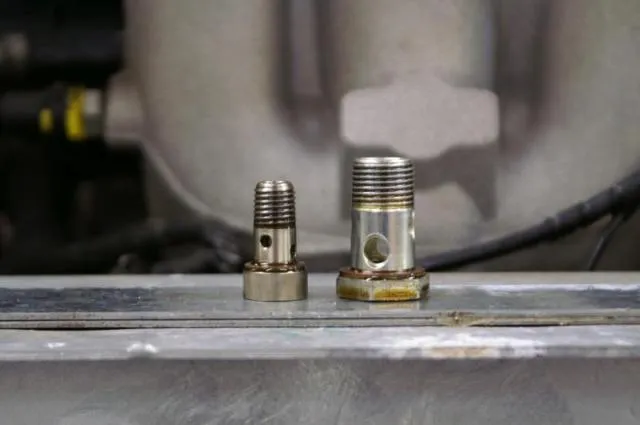
- Remove the wastegate actuator and its bracket (on his car) to make access easier to the oil feed union, the oil drain to the block and the manifold studs, especially the ones underneath the manifold. Refit the actuator afterwards, which takes the working space back.
- Fit the new unit, then the upper heat shield (6 bolts).
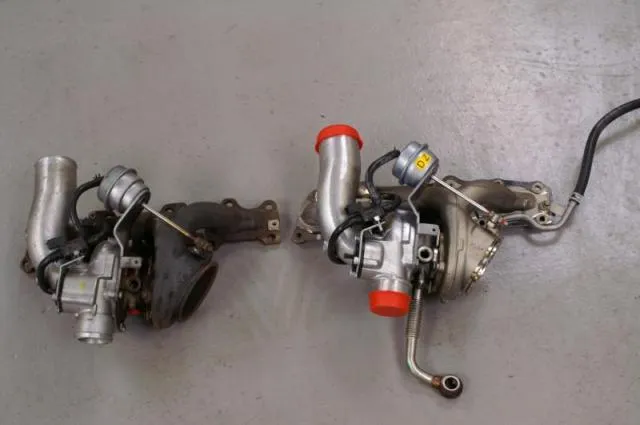
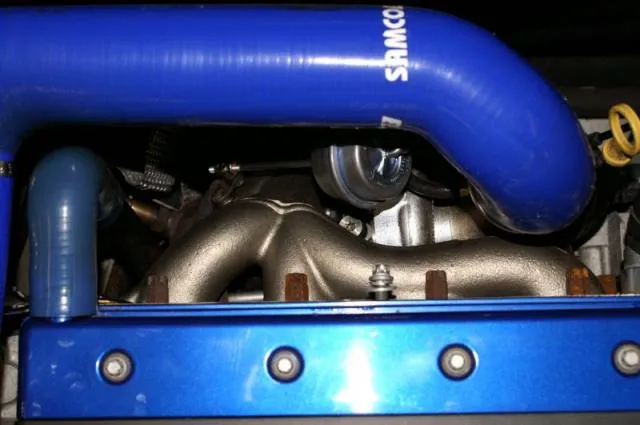
What it gains (as quoted in 2006)
- Top end. One owner said from memory that the standard turbo gives up at about 5,500 rpm while the VXR one keeps going. Another owner said it holds boost at high revs as well as the hybrid turbos while the low-rev boost profile is almost the same as the standard one. He worked out that his 255 lb ft car (245 PS) holding the same torque to 6,500 rpm would make about 25% more power, if the injectors could supply the fuel. That was his arithmetic, not a test.
- On its own. One owner said just swapping it without a remap won't give much, and that it is best mapped to stage 1 or 2, with better results at stage 3 and beyond. Another owner argued that the standard turbo could already be mapped to more power than a car without a charge cooler can cool (about 250), so the gain is mainly reliability unless you go for injectors and big power.
- Power quoted. About 270 bhp with a remap and charge cooler. One owner in May 2006: 215 bhp at the wheels was looking consistent on a couple of cars, and they were revising their VXR maps upward because of the strength of the unit. Another owner guessed 275 bhp. These are the tuners' and a guesser's figures, with no dyno sheets in the thread.
- The options as one owner laid them out (2006). (1) Swap to the VXR unit, about £500 plus about 4 hours, a good deal if you have killed the turbo. (2) Map it to stage 1 or 2. (3) Add a performance clutch (about £1,500, mostly labour), a charge cooler and a stage 4 map at about 270 to 280 bhp. (4) Larger injectors, which they were still developing. He placed the VXR unit between a standard unit and a full Turbo Dynamics hybrid (about £1,100), which he said has a wider range of internals.
- Clutch. One owner suggested an uprated clutch at these power levels, quoting £690 fitted, or £915 with a lightweight billet steel flywheel. His own car had both. See Clutch choice.
Injectors
One owner said that after logging, the standard injectors were at maximum duty cycle to make just over 270 bhp, so bigger ones give extra range to hold high-rpm fuelling and more boost above 6,000 rpm, plus a safety margin and cooling. He said they were likely to insist on bigger injectors for their stage 4. Another owner, two months later, said he didn't think they needed them yet. Another owner's view differed. See Injectors for the duty cycle arguments.
Why turbos fail
Asked whether turbo failures came from wear or remaps, one owner said they saw failures from normal wear and tear, lack of care and poor oil change cycles (no hot shut-down procedure, a cold engine thrashed before the oil protects the turbo, infrequent oil changes), and had not seen one caused by remapping within the factory's durability. That is a tuner's view. Another owner said years later that compressor stall stresses the turbo's thrust bearing, see Turbo recirc valve.