
The idea in one paragraph
An injector is a valve that the ECU opens for a set time. "Duty cycle" is the share of the time it is open: at 80% it is open four-fifths of the available time. The more fuel the engine needs (more power, higher revs), the higher the duty cycle. Owners agreed that you pick injectors so the duty cycle at your top power and rev limit stays below a ceiling. They disagreed about where the ceiling is and whether too-big injectors cause harm.
The injectors owners named
The names are the forum's colour names. Flow figures come from different posters at different pressures, so they don't line up with each other.
| Injector | Figures quoted | What owners said |
|---|---|---|
| Black (Z20LET, turbo) | 365 cc/min at 3.8 bar on a flow bench (Exmantaa, 2017). 370 cc quoted by siztenboots. | Standard on Courtenay stage 2 supercharger conversions, according to Exmantaa, who got a flat 0.8 lambda (11.8:1) to the 6,800 rpm limit and 249.8 hp on the dyno. Two owners ran them to about 256 to 275 bhp, one leaning off towards 6,500 rpm at 256 hp on a 3.35 inch pulley and one fine at 275 bhp after a pump upgrade. |
| Green (LSJ) | 406 cc/min at 3.8 bar (Exmantaa, 2017, about 11% more than black). siztenboots recalled only 310 cc. | Disputed. See "Green or black?" below. |
| Blue (Astra/Zafira VXR, Z20LEH) | Quoted at 470 cc/min at 3 bar, 14.5 ohm. Measured 442 cc/min at 3.8 bar on a bench (Exmantaa, quoting a test by another owner, who found them flowing a little less than advertised). | The usual next step up. Owners put them at about 80% duty for 300 bhp at 4 bar fuel pressure (a calculator figure from one owner), and said they run out of capacity at roughly 330 to 360 bhp. See below. |
| Siemens Deka 4, 60 lb (about 630 cc/min) | 630 cc/min quoted. One owner thought a 3.3 bar regulator would suit about 430 bhp on a turbo car at 80% duty. | The choice for Harrop and other bigger-power builds in 2013. Needs the fuel rail spaced out, EV1 connectors and a remap. |
| Bosch EV14 (0 280 158 123) | 650 cc/min at 3 bar, 705 at 3.5 bar and 760 at 4 bar, 12.8 to 14.5 ohm, dead time 0.7 ms at 14 V (specs pasted by siztenboots in 2010, which may not be the same variant as the 0 280 158 123 fitted in 2018). | Exmantaa said the Bosch 60 lb injectors he and others run on bigger Harrop engines are Porsche GT3 injectors, and that EV14s cope with the very short opening times needed at idle. Bosch 0 280 158 123 was fitted to Z22SE rails by two owners in 2018. |
- Part numbers. One owner in 2011 gave the blue VXR injector as Bosch 280156280, 14.5 ohm, 470 cc/min at 3 bar, 90 degree spray angle, with a Jetronic connector. A Vauxhall dealer quoted GM 55556799 at £56 plus VAT each (£67 retail) the same day. This is from one dealer's parts system, not checked.
- Not Vauxhall-specific. Nev said the blue injectors are made by Bosch and used in a variety of other cars, so they are not unique to the Z20LET family. He offered a spreadsheet of several hundred injectors and their specs, which isn't in the thread.
- Spray pattern. One owner asked whether the blue VXR has the wrong single spray pattern. Another replied that it has a good pattern, and said only the Siemens "680" has a single spray (he wasn't sure about other sizes). Another warned to match the spray pattern as well as the size.
The duty cycle rule
- About 80% at your power and rev limit. Most posters: a pasted injector FAQ said duty cycle shouldn't usually exceed 80%, and Exmantaa, vocky, fezzasus and chris_uk all used the same figure.
- Why not higher. Exmantaa said that near 95% the ECU can no longer control the injectors properly because of dead times, and you want some margin for air conditions. One owner (ultimate, on a Saab B207 with a Harrop, so not a Z22SE) said above 90% the ECU can't run the injector between 90 and 100%, so it is always 100% injected.
- Moving up. vocky said to fit bigger injectors if you are at 90% or more. One owner running 99% duty at 6,800 rpm on a 3.1 inch pulley asked whether that was acceptable, and was told 80% is the aim, so blue VXRs were the next step.
- The stricter view. Nev said to never exceed 75% and ideally stay under 60%. See the next section.
- Rev limit matters. At high revs there is very little time per injection, so the same engine needs bigger injectors to keep the duty cycle sensible (Exmantaa).
- Pressure changes flow. A higher rail pressure makes an injector flow more. One owner worked out that a 470 cc injector at 3 bar is about 575 cc at 4.5 bar. vocky said injectors don't always flow what they claim: a set sold as 370 cc flowed only 310 cc for him.
Too big?
This was the main argument in the 2013 and 2017 threads.
- Idle and low load. Exmantaa said very large injectors need tiny opening times at idle, which older designs (with long dead times) handle badly, and that buying bigger injectors only to sit at 60 to 65% duty is a waste. fezzasus agreed that high-flow injectors control very low flow poorly. Nev (who ran 630 cc injectors for three years) said you will likely get worse mpg and may get a worse idle as you go up, and techieboy said his economy got much worse after Z20LEH injectors on a stage 3.
- The other side. Nev replied that plenty of road cars have large injectors and idle perfectly, and that any idle problem is down to the map and the ECU's resolution. The Batman said he runs 630 cc injectors at 330 bhp with good fuelling and 14.7:1 at idle.
- Atomisation. chris_uk argued that a smaller injector at higher pressure sprays a finer mist, which burns better and cools better. The Batman replied that the ECU controls the injector and he didn't see poor atomisation in practice. Another owner (siztenboots) said engine dyno tests at his work always showed better atomisation at higher rail pressure. slindborg said lower pressure means cooler fuel and less wasted pumping. Nothing in the thread measured it on one of our cars.
- Nev's bore wash case. After Courtenays fitted 630 cc injectors instead of the 875 cc set he supplied, his map had a duty cycle of 100% at maximum power by his calculation. He also found they had altered the pressure regulator to raise rail pressure, which he hadn't been told. After about 10,000 miles his bores were glazed and his oil smelled of petrol and was thinner. He suspected injectors squirting into closed ports and washing fuel onto the bores, but he said it was hard to pin down and that other things could have caused it. That is one owner's theory on one engine.
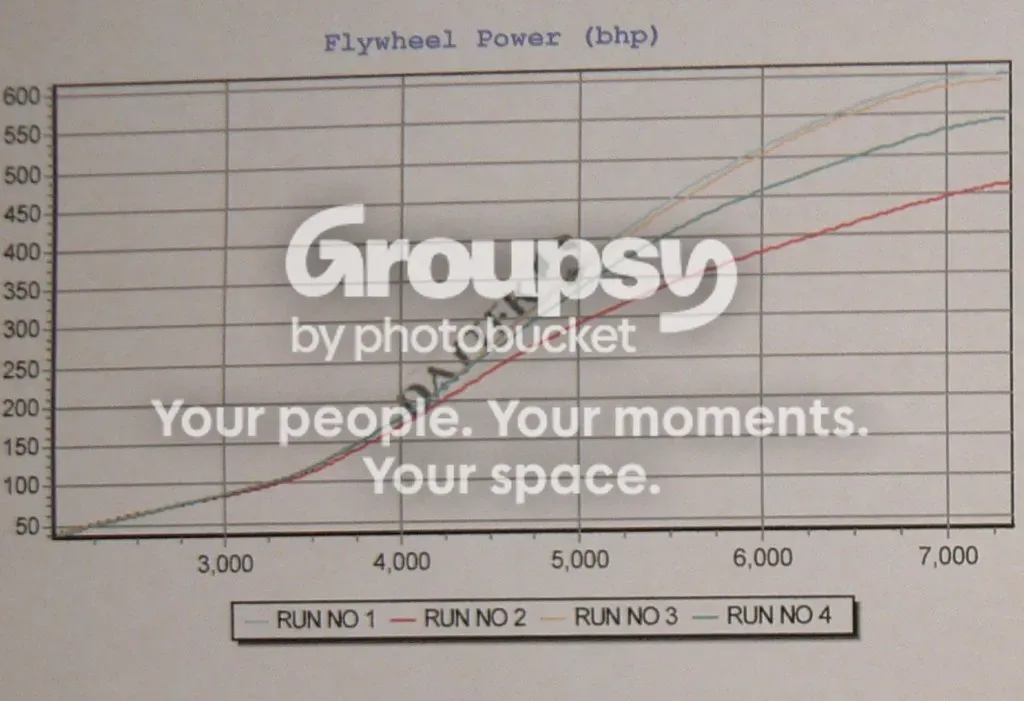
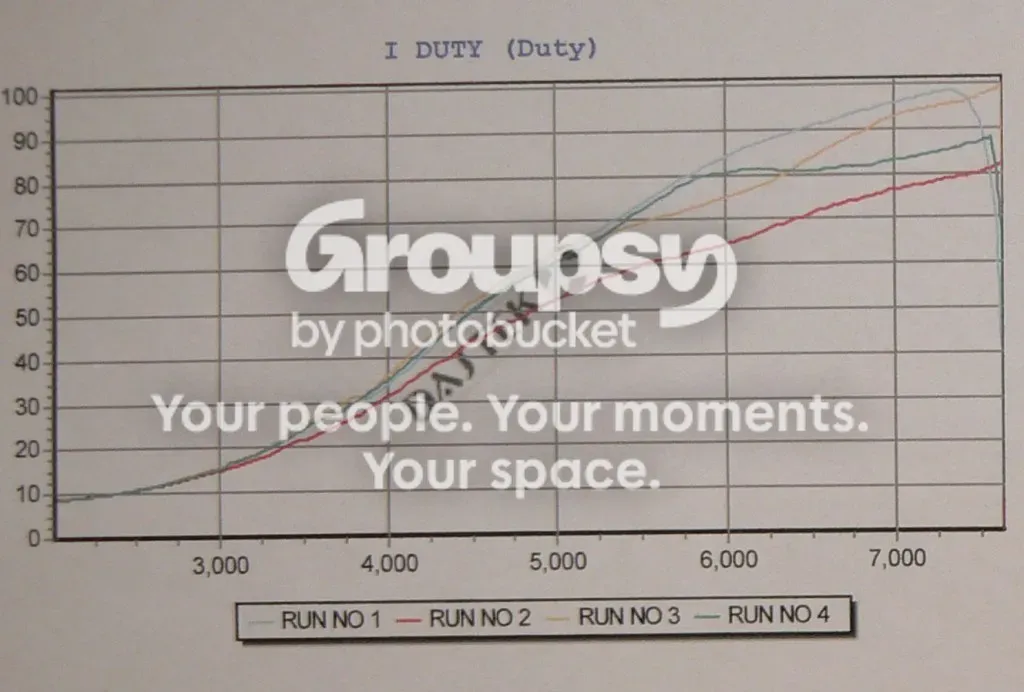
Green or black? (2017)
A new owner planning a stage 2 supercharger asked whether the green LSJ injectors would do or whether VXRs were essential. The answers:
- Fine for stage 2. Exmantaa said LSJ greens are a direct fit and fine for basic stage 2 (250 to 255 hp, 7,000 rpm limit), provided the fuel pressure is boost-referenced. Above that power, or at higher revs, you need bigger injectors. The Batman said VXRs are best but plenty of people run greens. smiley suggested fitting them and logging to see.
- Not so fine. chris_uk called them poor and said he would use the black Z20LET ones instead, because on his logs the greens hit 90% duty at a lower power than the blacks, and said he would dig out the logs, though none appear in the thread. fezzasus said the LSJ and Z20LET have the same factory power and the greens are better matched to the head. Exmantaa found that odd given the bench figures. CHILL Gone DUTCH said he had also seen higher duty cycles than expected from greens and wondered whether they are less linear than the VXR or LEH injectors. CHILL also estimated over 90 to 95% duty at about 6,500 rpm on greens, and about 245 to 250 hp at the 80% mark.
- Went to blue. Two owners moved from green to blue: one at about 250 bhp on a supercharged engine (CHILL suggested his fuelling was inflated by hot inlet air before he fitted water injection) and one who found the greens close to the limit after fitting what he called "the full tullet" of upgrades. CHILL also said you could change the fuel pressure to help.
How much power can the blue VXR injectors take?
These are claims from the 2013 threads, mostly second-hand, and they don't agree.
- chris_uk said VXRs are fine for 300 bhp cars, that one car ran at 315 bhp without trouble, and that a car with raised pressure made 377 bhp on them. He said above about 350 to 360 bhp the intake air temperature becomes the limit regardless of injector, and that injectors under 80% are fine.
- On a 1.6 turbo build one owner said he maxed the VXRs out at 335 bhp on 3.5 bar. Another owner (ultimate) maxed them out at 100% duty above 6,200 rpm with a B207 and Harrop at 4.5 bar. Exmantaa said in their LSJ Harrop builds the VXRs can't cope with the flow needed at higher rpm, so they use 60 lb injectors at standard rail pressure.
- Nev, on a turbo car with a Courtenays map and a 3.3 bar regulator, calculated 80% duty at maximum power on VXR injectors.
- oakmere pointed out that the VXR injector was specified by GM for a 240 bhp car and that a rise in pressure to make it work puts more demand on the rest of the fuel system, so a larger injector is the safer route.
- Exmantaa pointed out that 4.5 to 5 bar plus boost needs a pump that can flow at 6.5 bar or more, and that a Walbro 255 behaves more like a 155 at those pressures (from a pump curve he posted, image not saved). chris_uk replied that his new pump was rated at 390 litres an hour at 5 bar, from a retailer's listing. See Fuel pump replacement.
Fuel pressure versus injector size
- The standard Z22SE rail runs 3.8 bar. The Z20NET (and Saab B207) rail runs 3.0 bar, so swapping rails means changing the regulator or the map (Exmantaa).
- vocky and haggi961 both said that raising pressure to make small injectors work is a poor second to fitting bigger injectors and a lower pressure. chris_uk argued the opposite on atomisation and intake temperature grounds.
- Exmantaa said their LSJ Harrop setups run 3.0 bar because it is easier to map with the 60 lb injectors and kinder to the fuel pump once boost is added.
- smiley said the theory behind the 3 bar rail was less hot fuel pumped back to the tank. After one Dutch owner had serious fuel heat trouble with it, smiley's conclusion in 2018 was "don't bother", though others including himself run it fine. Exmantaa said that owner's trouble was mainly his high-power pump set-up, though the lower pressure may have made vapour lock more likely.
You must remap
- Different injectors have different opening delays and flow, so the ECU needs the new injector data. Bargi (2014) said VXR injectors are a straight swap but a recalibration is needed, easy with OBD Tuner or an aftermarket ECU.
- On the Dutch ECU the supplier said (in an email posted to the thread) that the Siemens 50 lb and 60 lb injectors give poor results with the standard ECU software, but that he had calibrated several engines with them. Exmantaa said the supplier measured his own set of 60 lb injectors for the software.
- siztenboots asked whether the ECU also needs calibration data from Siemens for offsets and dead zones, which is why bare flow figures aren't enough.
- chris_uk said he was told not to fit VXRs to a stage 2 and that Courtenays fitted and mapped his on the day. Kieran McC said Courtenays could map VXRs on his LSJ.
- The Dutch ECU supplier's advice on sensors for a Harrop was a 2.5 bar or 3 bar Bosch TMAP (0 261 230 042 and 0 281 002 437 as quoted), and a wideband lambda sensor can use the unused EGR input for wide-open throttle tuning. The Batman said the standard LSJ sensors would do and that he had spares. None of this is checked.
What owners paid and where they bought
| Item | What the owner said |
|---|---|
| Siemens 60 lb set (UK group buy, 2013) | About £200 a set was first quoted, then £175 shipped. |
| Siemens 60 lb from ZZ Performance (USA, 2013) | NickB787 got a set for about $150 plus £26 import tax and a good service. ultimate bought his in Germany for about 200 euros. |
| Siemens 60 lb new from the USA (2014) | Bargi remembered about £150 a set. |
| Blue VXR injector, Vauxhall dealer (2011) | £56 plus VAT each (£67 retail). The complete rail, regulator and four injectors (55556798) was £102 plus VAT (£121 retail), cheaper than four injectors, which techieboy said was allegedly a Vauxhall pricing mistake, so many people bought the kit. |
| Blue VXR availability | In 2011 Courtenays said they couldn't get any. By 2017 chris_uk said they were harder to find and Germany was the best bet. |
The 2011 Vauxhall stock position is out of date. These prices are from 2011 to 2014 and are only an indication.