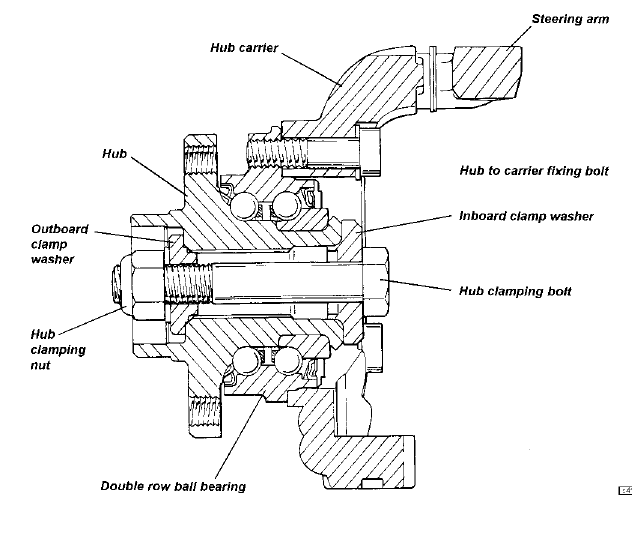
The wheel bearing is built into the hub, and you replace the whole unit. Owners agree that it is the same part at the front and rear, left and right (an Astra G / Zafira A 5-stud hub bearing), and that it comes with the ABS sensor and its wire. To fit it, see Wheel hub replacement, front and rear.
Signs of a failing bearing
- A drone from the rear is how one owner noticed his rear bearing going. Another said his car felt transformed after replacing them.
- Play or wobble in the wheel, and grease coming out of the seal. One owner found a front bearing had gone dry and was making a lot of noise, then very wobbly soon after.
- ABS warning light is often a broken sensor wire at the hub, not the bearing itself. See ABS sensor cable repair. Some owners swap the whole hub to cure it.
Bearings should last a long time. One owner of a Honda-powered Elise with 200k miles said the original units weren't needed, and another says the VX hubs and bearings are overbuilt because they were designed for much heavier V6 cars. One owner who went through three front bearings (25,000 miles for the first and 40,000 for the second) put it down to a faulty last one.
Which brand?
- FAG is the most recommended: "the good proper ones", machined on both sides and with high-quality bearings. Prices quoted: about £75 + VAT from Elise Parts (2016), about £95 delivered with a 2-year warranty and about £55 for an OE replacement from one parts supplier (2020), and about £68 each from AutoVaux (2013).
- SKF, and SKG-branded units were also reported as good quality. One owner had an SKG fitted and the problem was cured. One owner described the SKF units as thinner-looking than the FAG.
- Lucas units (under £60 at a parts chain on a promo code, 2016): one owner says they have stopped using them after a number of issues. Another owner says it is a pity to save a few pounds on a critical part.
- Cheap eBay units: opinions are mixed. One owner thinks the bearing in the eBay ones is poor, while another fitted one at about half the price and it was fine so far, though he expects it to last half as long. Don't buy the really cheap ones.
- An owner who bought four from AutoVaux had them fit perfectly, and another got four from a Vauxhall parts supplier and they fitted fine. One owner has sent back more than he has fitted and says it is a lottery with pattern parts.
- Test before fitting. Spin the new hub in your hand off the car. If it doesn't feel smooth then, it won't get better when fitted.
- Hub diameter. Some units are slightly oversized and need machining before the wheel fits. One owner passed on that the correct listing is the one numbered 1114 (Astra G / Zafira A front hub bearing, 5 stud), which he hadn't used himself.
- Bolts supplied may be too long. The bolts that come with some kits are for other cars. Use the right ones from Elise Parts or a Lotus dealer, or reuse the originals if they are in good condition.
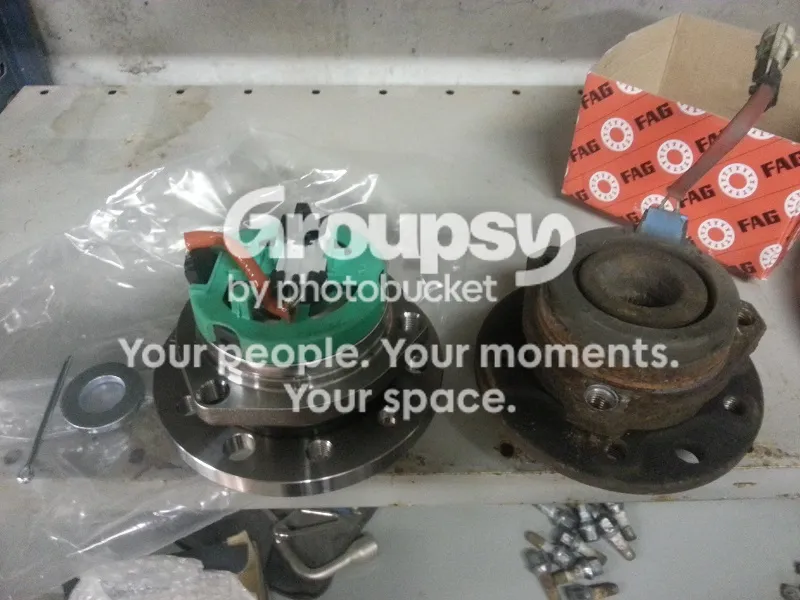
The front centre clamp bolt
Some front hubs have an M16 bolt through the centre, with stepped washers and a nut, clamping the hub together. Early cars had them. Many Turbos and later cars don't, and owners say it is fine not to have one (one owner says Lotus found it wasn't needed on later cars).
- Genuine (OEM) bearings use a double-row ball bearing whose inner race is folded over during manufacture, so the unit holds itself together. The bolt isn't needed, but on a car with sticky tyres it can help the inner race stay stable under high side load, since the folded edge can be pushed back and play can develop.
- Some cheap unbranded units are made with ordinary tapered roller bearings, which are stable only if clamped. On the front, free-running wheel the through-bolt and washers are then required, or the bearing can fall apart quickly. The rear is clamped by the driveshaft nut anyway. This is one owner's explanation (backed by others), and the thread doesn't say how to tell which type you have.
- If your car came with the bolt, put it back. Two owners did. One who broke two hubs on track recommends fitting the bolts for track use, and says the breakages started when he moved to Toyo R888 and slick tyres on wider wheels.
- Never hit or hammer a new bearing pack on. This damages the races and balls, and is a reason a bearing manufacturer will refuse a warranty claim.