These repairs come from a single owner of an NA car, after he fitted a new hood cable (see Soft top cable replacement). He asked six questions about the hood on the forum, got no replies, and answered the first four himself six weeks later. His repairs are untested beyond that, and he said he didn't know how long the sealant would hold. The thread's photos have the original annotations.
Split sealing rubber, and loose side padding
The sealing rubber on the hood support was split but otherwise good, and the foam inner side padding was loose because the white plastic fixing clips move about in their housings. Someone had used a black mastic that hadn't stuck well.
- Clean the aluminium channel and the old rubber of all the old brown glue.
- Use a black sikaflex-type sealant. Where some rubber was missing the owner rebuilt it with the same sealant.
- Fill around the white plastic fir-tree clips so they can't move about so much, and add a few dabs of sealant spaced between the clips to help grip and stop vibration.
He originally wanted something that could be cheese-wired apart if the hood needed dismantling later. The sealant is rubbery and he didn't say whether it can be.
Split pad corners
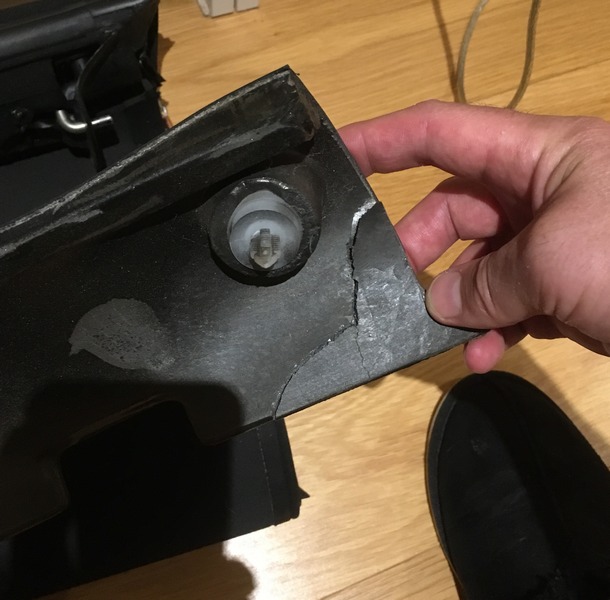
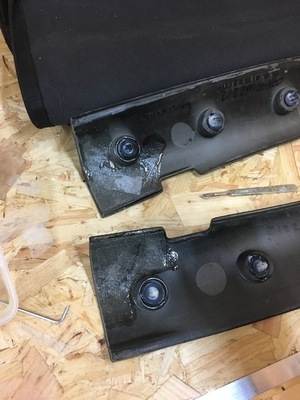
- Run superglue into the cracks, tape them closed and leave for a few days so it goes fully off. This was quite strong on its own.
- For safety, reinforce it with fibreglass tissue and epoxy resin. The tissue is weaker than chopped strand or woven cloth, but it only has to take tension and it is thin, so it doesn't bulk out the foam.
He says the epoxy stuck well and didn't react with anything, and the repaired section has no noticeable deflection.
Missing nylon spigot caps
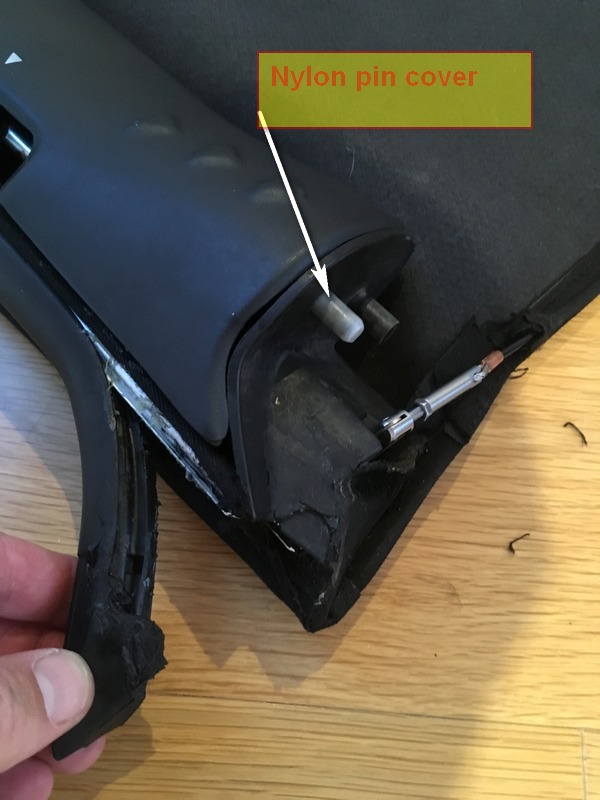
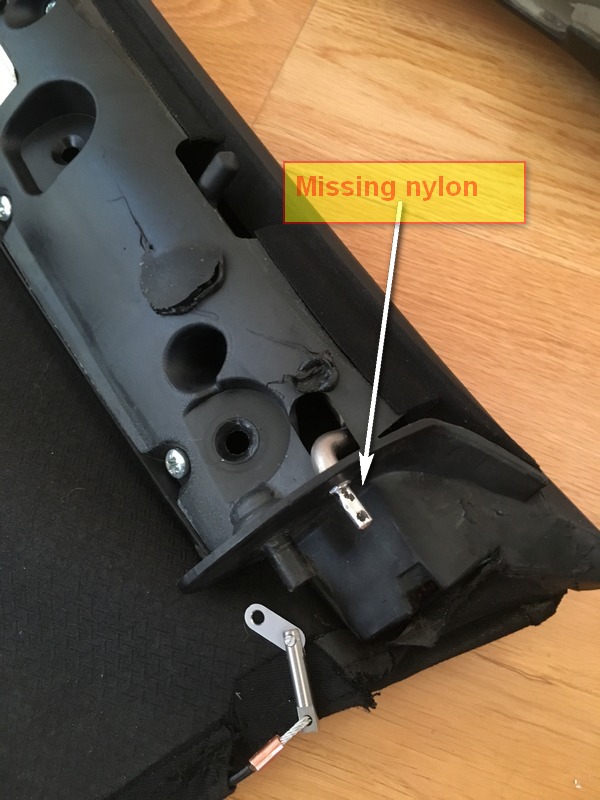
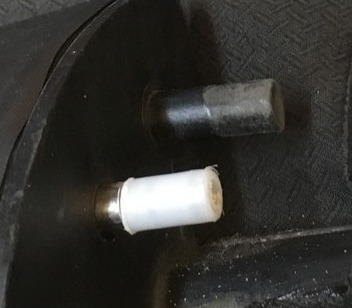
The caps that cover the attachment pins were missing on one side. The pins on the other side still had their nylon caps, which are longer than the pins they cover.
- He found hard nylon tube would be closest, but wondered about its strength.
- What worked: a piece of HDPE tube, 6 mm internal and 8 mm external diameter, cut and filed to size.
Unanswered questions
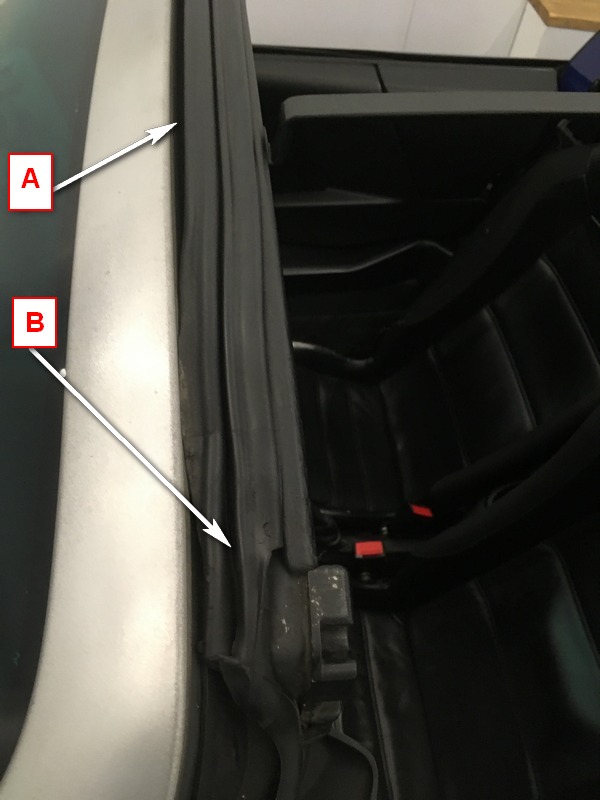
- Hood sheathing and front cable at the front windscreen seal. Does the hood material and front cable go in front of the seal (A in the photo), or in a groove in the rubber (B)? In his car it did a bit of both and pushed the seal out of shape, and he couldn't tell which is right.
- Is there an inner liner for the soft top, for sound and heat insulation? (Another owner in a different thread mentions a "thermal protection pack" he removed, so one exists, but the thread doesn't say where it came from.)