
Symptoms owners described
- The change goes rubbery, then stiff, particularly left and right, sometimes suddenly. One owner who had it at a hot track (40 degrees C) said that after a while he could barely move the lever, and a mighty shove was needed even to move it left and right.
- Hard to get into gear when cold, and popping out of 2nd, which was better once warm (2015). In that case the owner suspected low gearbox oil after track days, and the replies said to check the oil first and to try the cables.
- One owner's cables dried up in 2008, first one and then a second, after a spell of warm weather. Bearing grease didn't help.
- Two owners (2014 and 2015) had the gear lever too far back and left in 2nd and 4th, touching the centre console in 2nd. That is a linkage adjustment, not a fault. See "Adjusting" below.
Cables, gearbox or selector?
- Pop the cables off at the gearbox end and move the stick. It is really easy with an open-ended spanner (a 10 mm on the hex part, rolled off like undoing it, was one owner's method). If the stick is then silky smooth, the cables are fine and the problem is in the gearbox. If it is still tough, the problem is the cables (or the selector mechanism, below). Two owners suggested this, in different words.
- Compare old and new. One owner pushed and pulled the old and new cables and said it was like one being lubricated with oil and the other with grit.
- Check the selector mechanism under the console. One owner expected the cables to be the problem. The garage found his selector mechanism falling apart, and he thought one of the main bolts had sheared. He said had he looked first it would have cost about £30 instead of about £200. He fitted the cables anyway and found the change felt like new. The advice was to remove the centre console and look.
- Check the oil. See Gearbox oil replacement.
- Greasing doesn't help the original cables, according to one owner, because of their construction, yet water gets in very easily. Another had no luck with bearing grease.
Why they fail: heat
- In 2003 an owner's cables locked up in the heat. The dealer replaced them under warranty and told him they cost 400 plus VAT each (the post doesn't show the currency, and he was in Italy). The cables run next to the pre-cat section of the exhaust, and he said the silver insulation wasn't enough. He added an extra layer of metal foil, wrapped in a metal hose like the one used for vent intakes. He said the cable section nearest the exhaust is the lowest section, where it bends towards the cat. In a later post he agreed there is much less heat with the cats removed.
- Another owner said the sheathing melts, and then the cables get sticky. An owner melted one on his exhaust, and another melted his at the Nürburgring after the exhaust flexi snapped (2018).
- One owner said to fit new cables and fit heat protection at the engine end.
Choosing cables
- Cablecraft (Tuthill) motorsport cables, sold by Elise-shop. In 2018 an owner confirmed that these are the ones to get. The shop's own description, quoted in 2012, says they are heavy duty, thicker than the originals, sold in pairs, and have separate adjusters at the ends. That is the supplier's claim, not an owner's finding.
- Owner opinions: one said that if your originals are shot, the new ones will make the world of difference, and if there is no problem they won't make much. Another said that in his opinion they don't feel as good as the OEM ones. A third said the gear selection felt like brand new. One seller said the car had done about 800 miles on them and they were notably better than the originals, but the new owner took them off, saying they self-centre slowly (see below). One owner said the handbrake is a bit stiffer with them because they are bigger.
- Prices (all from owners): in 2003 a dealer said 400 plus VAT each (currency not shown in the post). In 2008 an owner was quoted £289 plus VAT per cable. In 2012 one owner paid about £150 a pair delivered, another said £150 plus VAT and delivery. An owner said the price was nearly double what he paid when he first fitted them. In 2015 an owner offered a pair of the Elise shop ones at group buy price, and eBay and the Lotus auction site were suggested.
- NA or Turbo. In 2011 an owner said the EPC lists different part numbers for the Turbo and the NA, consecutive numbers at the same price, and asked whether they are interchangeable. Nobody answered directly. One owner said he believes he ended up with the Turbo cables because they were all one supplier had. In 2008 an owner was told the F23 box is the same in both, the NA having bellhousing differences (starter motor on the opposite side). The Europa cables are different (6-speed), and front-wheel-drive cars' cables are much shorter.
- Fitting: see Gear cable replacement.
Problems with the Cablecraft cables
Won't self-centre, or stiff
- In 2019 an owner fitted the Elise-shop cables to a Turbo and found the gear stick didn't spring to the middle. Gears selected perfectly and didn't feel stiff. Re-routing didn't help, and the adjustment was fine. With the cables off at both ends, the lower one felt stiff. He then found that the brown rubber seal on the lower cable was too tight a fit on the moving part. Without the seal, the problem was cured. The same seal on the other cable was a better fit. He compared them and said the lower seal was a tiny bit smaller in diameter. Spray grease did nothing. Another owner suggested carefully reaming 1/4 mm out of the inside of the seal. Another suggested silicone grease. Neither was reported as tried.
- In 2017 an owner who had bought a car with them fitted took them off. He said they are stiffer and the stick doesn't self-centre as well, though when pressed he said they aren't really stiff, just slower to centre than on his last VX. He hadn't fitted them himself, they were routed like the originals, and he hadn't checked the clamp. The seller was baffled, because they were expensive and had done about 800 miles. Another owner said they shouldn't be stiffer, and asked whether the oblong bracket underneath at the rear had been modified, since it clamps onto the cables. He said his are fine.
- In 2024 an owner with them fitted said the shift quality is "pants", with no self-centring or firmness, and asked whether the clamps restrict movement and should be removed. Nobody had answered in the thread.
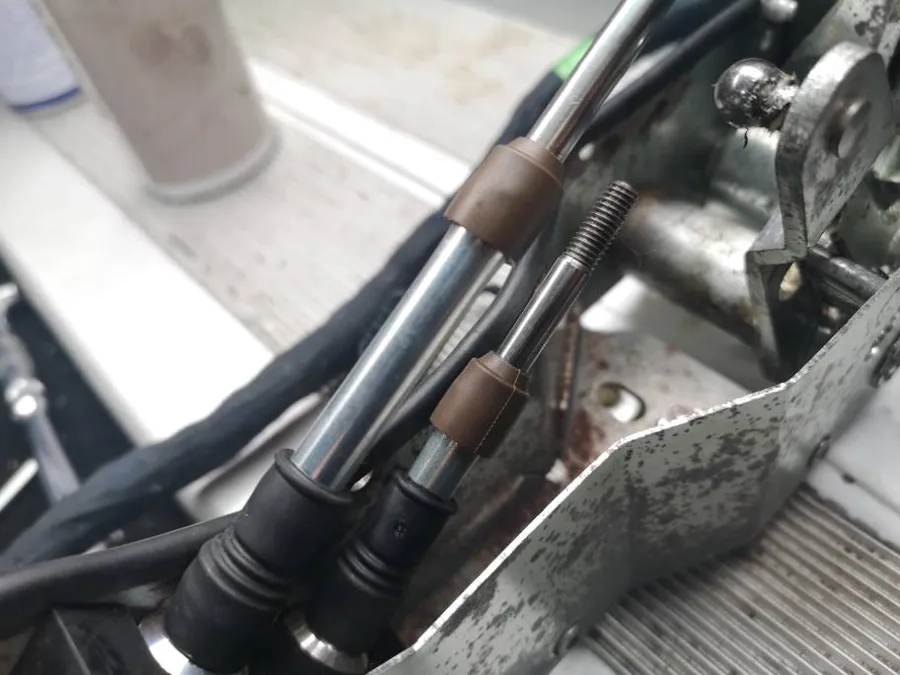
Rod ends too long, no clip groove
See Gear cable replacement (steps 16 and 17) for the author who had to re-thread and cut down his rod ends.
Adjusting
The two sets of instructions below come from different owners, in different years, and one is for Cablecraft cables. Check both against what you find on your car.
- At the gearbox end (2014). The top cable adjusts the lever fore and aft, and the bottom one side to side. This owner's lever was too far back and too far left in 2nd and 4th, so he disconnected both ends and turned them anticlockwise to lengthen the cables. He said it was easy, and the change was smoother and more precise afterwards.
- Cablecraft cables (2012 author).
- Coarse adjustment is at the big 22 mm nut at the gearbox end. He found it easier to remove the e-torx bolt and pull the cables back under the car to do it.
- Fine tuning: pop the cable ends off the balls on the gear stick and screw the end in or out.
- Set the shift until the stick is vertical, seen from the side, in neutral.
- Set the select until the spring (visible on the right side of the remote assembly, at the front) has no preload in 3rd or 4th gear. The lever would also be vertical in the rear view.
- Make sure at least 4 to 5 threads are engaged between the cable rod and the cable end, for strength, and nip up the lock nuts.
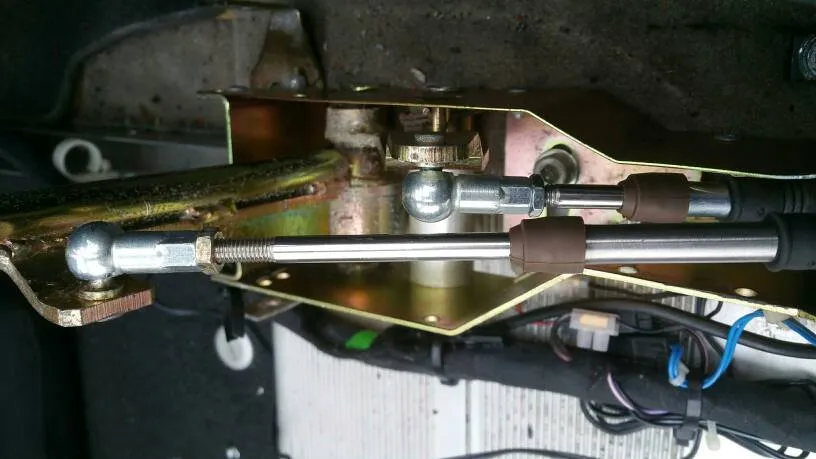
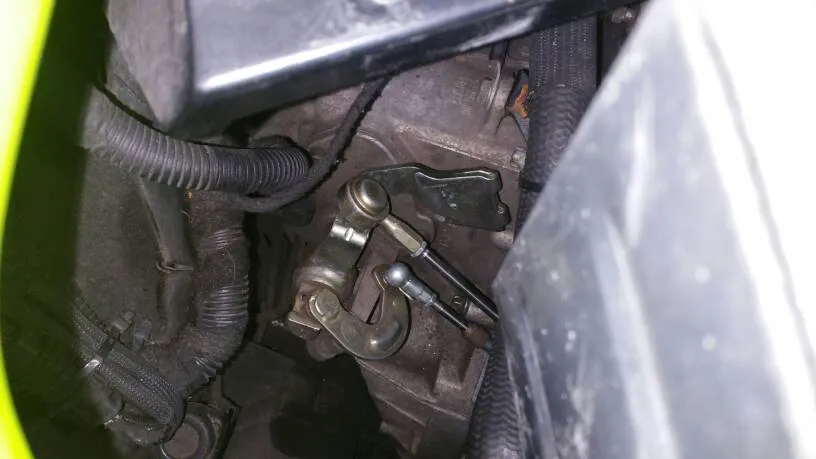
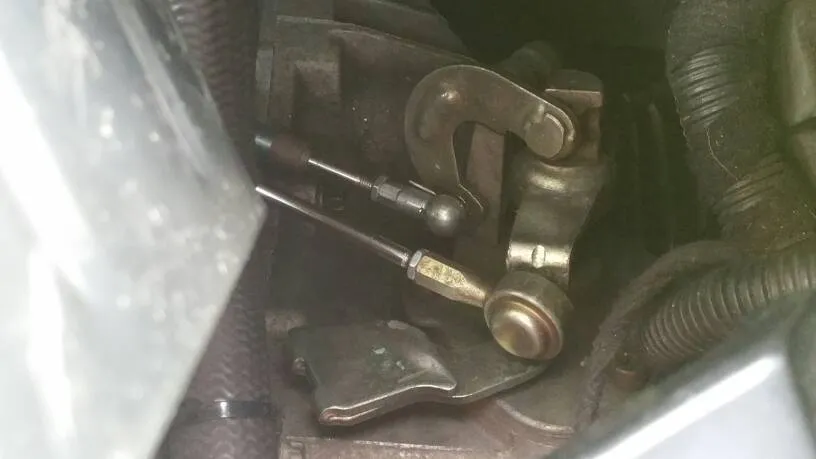
- New cables that only give some gears. In 2017 an owner could initially only get 2nd, 4th and reverse. After adjusting he could get all gears, but 1st to 2nd was clunky. He posted photos of his end fittings, in the cabin and at the gearbox, below. They are one owner's final positions, not a reference.
Quick shifts and gaiters
- An owner fitted a quick shift lever and said it feels better moving through the gears, but doesn't make much difference from left to right. Another doubted that changing the lever action improves the feel.
- An owner who fitted a gator removed it quickly because it felt as if it was damaging the linkage.
Help wanted
We don't have the Vauxhall part numbers for the NA and Turbo cables, a current price, whether the NA and Turbo cables really are interchangeable, or a fix for the Cablecraft self-centring complaints beyond the tight seal. If you know any of these, please tell us and send photos.