
Why the standard jets are poor
- They are mounted on short stalks, and owners found them difficult to adjust: either over the roof (which matters with the roof off) or just a few inches up the screen. The difference between the two is minimal.
- One owner said his driver-side jet blew over the screen above 40 mph and the other hit the screen just below the wiper blade.
- Another said the water seemed to bounce off the screen and into the air, which he saw on another VX.
- In 2006 one owner said his had turned to a trickle that didn't reach halfway up the screen. In 2010 one owner's jets had been chewed by mice.
- Fiddling with the jets made them worse for one owner, who said they ended up all over the place.
The options
1. Clip-on Citroën BX spray bar
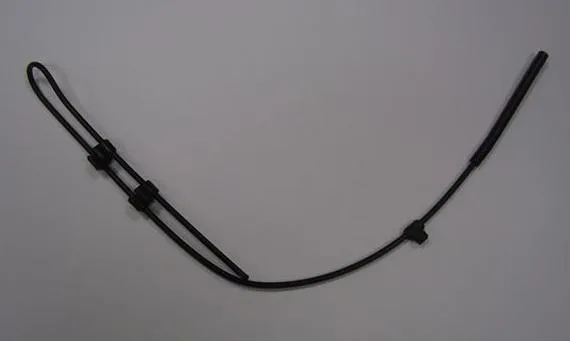
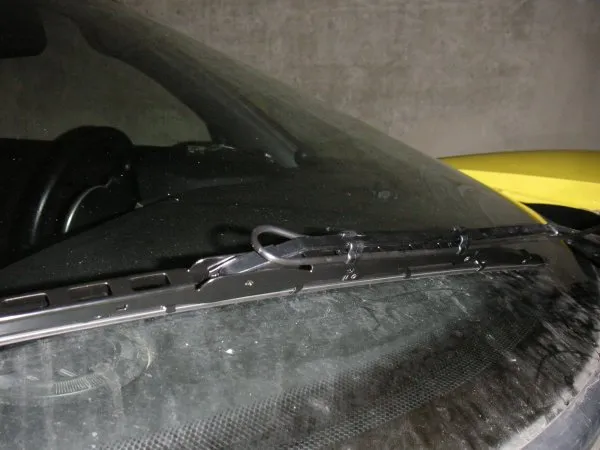
The original 2006 mod, passed over from the Elise forum. A small plastic bar with several holes clips onto the wiper arm and takes water from a tube.
- Cost: about £9 to £12 in 2006, and £17 was quoted in 2012. A 2013 owner said Citroën dealers stock it, that it comes with the tubing and clips (no drilling needed) and that it has been on his car for two years.
- Part numbers: a 2006 post gave Citroën N93780 ("BX washer jet spray bar", ordered online). A second post the same day gave 95 495 714 from an invoice, £10.49 including VAT. We can't tell why they differ, so ask the dealer to confirm. One owner in 2010 could not find anywhere to buy one.
- Peugeot 405 alternative: a different design that sits beside the blade instead of on the arm. Peugeot part 643861, "spraying ramp", was £5.46 plus VAT in 2004 (one post).
- It works with any blade, which is why one owner prefers it. Replacing the blade is then easy and cheap.
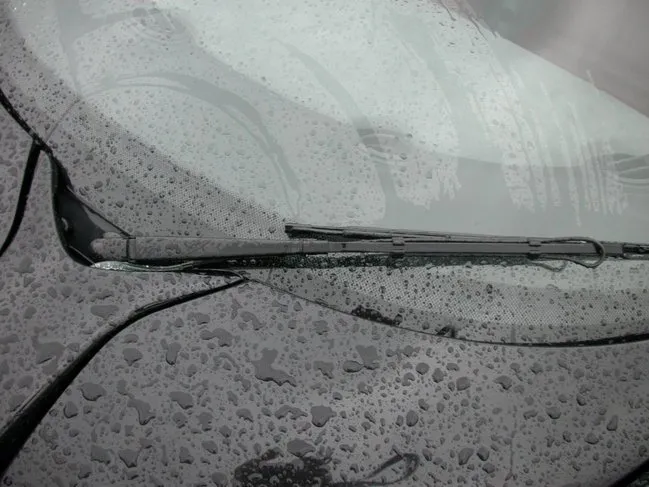
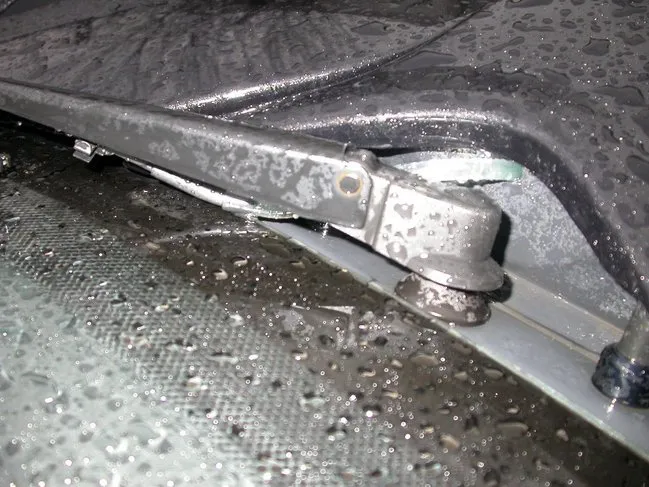
2. Renault Espace wash-wipe blade (Valeo VM15)
- The Espace blade with its spray bar built in is what Elise Parts sells as its wash-wipe system. One owner said so in 2010: the driver-side blade from a 1994 Renault Espace, about £10 online.
- 2013: one owner found it was a Valeo VM15, under £10, 24 inch (600 mm). The box says it also fits the Opel Movano, a Renault Espace 2 (1991 to 1996) and a Renault Master 97. Another owner confirmed it fits the hook-type OEM fitting. A different owner asked if it was for the Elise Parts retrofit arm and was told it fits the standard hook type.
- Retailers: one said a motor factors chain stocks it. You can search by the car (a 1992 Mk2 Espace) with no registration number.
- Elise Parts system: two owners liked it (2010). One said the blade works better than the flat blades he had tried, and the jet puts the fluid where you want it. He also said it is overpriced for what it is unless you need a new arm too. We haven't seen its price.
- Early arm? The early pin-type arm won't take it without changing the arm. See wiper blades and arms.
- A blade with a built-in spray bar from an online seller (2014): one owner fitted one in about 3 minutes. He needed 1 m of washer hose and a small hole drilled in the plastic trim by the original washers, plus cable ties. It stopped the smearing at motorway speeds. Another owner who has one said the bottom of the blade doesn't get very wet and smears.
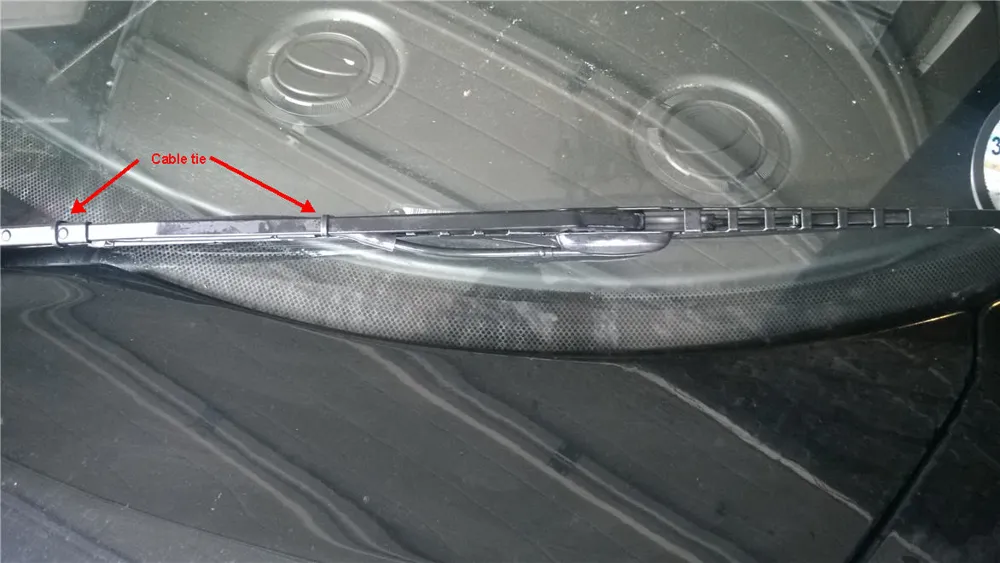
3. Home-made versions
- Truck jets: one owner fitted a jet from a DAF truck (about £7) that clips around the arm and has four nozzles, two up and two down. Another found jets of the type used on a Jaguar and on vans, which clip onto the arm (cost 50 pence from a breaker). Photo below.
- Drilled tube: a washer pipe run up the arm, sealed with a stainless bolt and with small holes drilled in it (2010, about £3), or aluminium tube with holes in it (2006).
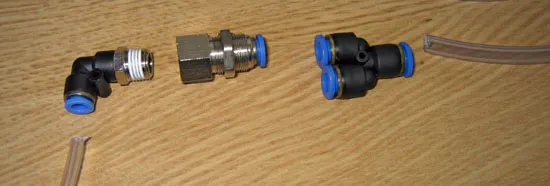
- Halfords parts (2010): a length of tube, a non-return valve, a Y piece, two T pieces and cable ties. The owner called it ugly but said it puts a lot of water on the screen.
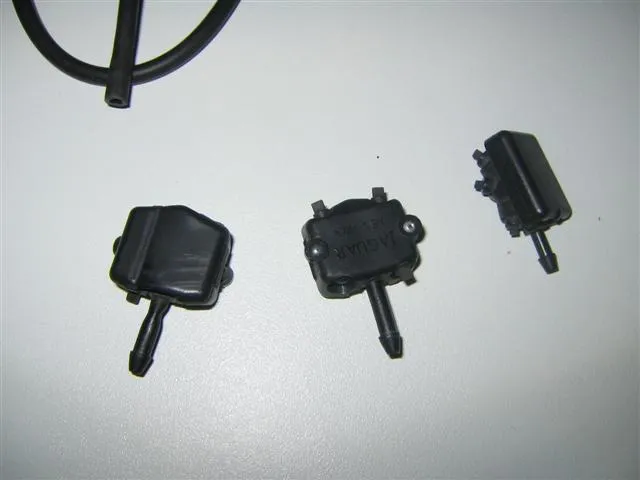
Fitting a spray bar: pipe routing
Owners sorted this out in the 2006 thread. The bar needs a feed from the washer pump. There are three ways to get the pipe to the arm:
- Over the top of the plastic cover behind the standard jets. The tube is then 1 to 2 inches too short, so one owner pushed a length of 3 mm tubing about 20 mm into the standard 4 mm tubing (a tight squeeze). About 15 minutes for the job.
- Through a drain hole. One owner pointed out that a 3 mm pipe through a hole that is about 10 mm across doesn't block it. Another did it this way first to try it.
- Drill a small hole through the plastic cover, as Lotus does. One owner stabbed a 3 mm hole-reaming tool from a penknife through it and gave it a few twists, saying the plastic is thin. This keeps the drain holes free. Rubber grommets in the hole were suggested to make it easy to reverse.
Connecting it. The simplest way is to pull one tube off the pump and connect the bar there, so only the bar works. To keep the original jets working too, use a T-piece, so you also still have jets if the bar freezes. A non-return valve is advised: one owner who ran both said the jets came on about a second before the bar.
Tubing. B&Q "3 mm" tube is 6 mm outside diameter and "5 mm" is 8 mm outside (2006). One owner pushed the 3 mm pipe inside the 5 mm pipe, the 5 mm onto the pump. Use 4 mm silicone: two owners said clear PVC from a car parts shop went hard, changed colour and cracks with age, and is a pain to pull off. Black looks better.
Position on the arm. One owner took the wiper off first so the bar could sit further up the arm, which stops the end holes being blocked. He said one of the end holes of his was only hitting the arm and not going up the screen, and that adjusting the position cured it. The first owner said his coverage was perfect. The bar covers only half the screen (one owner), but the water travels up the screen when moving.
What owners said afterwards
- The screen "clears in 2 to 3 sweeps" (2006). A bar costing about £12. No tools, 10 minutes (several owners).
- One owner said it was the best mod he had done on the car, and owners kept bumping the thread every winter and spring until 2008.
- One owner expected to use much less washer fluid because one short burst covers the screen. Another said his water didn't last as long. Both are guesses.
- Combined with the wiper relay changes (fewer wipes after a spray, and a variable intermittent), two owners said it is one of the most effective mods. We haven't seen the relay details here.
Problems
- Freezing. One owner worried that the bar is more exposed than the jets and might freeze in sub-zero weather unless you use strong screenwash. Nobody reported it actually freezing. A T-piece keeps the jets as a fallback.
- Narrow spread. One owner who tried the integrated blade found the spray bar a little narrow and the nozzles not adjustable, so he kept the standard jets running too. He also didn't like how the blade wiped the centre of the screen and went back to a plain Bosch blade.
- Blocked washer bottle. One owner (2007) had old liquid in the bottle that kept blocking. He rinsed it thoroughly and removed the rubber bung the pump sits in, because the gunk collected there.
- Passat or other aero arms. Owners who had swapped to different arms asked whether the bar would fit. We have no answer.